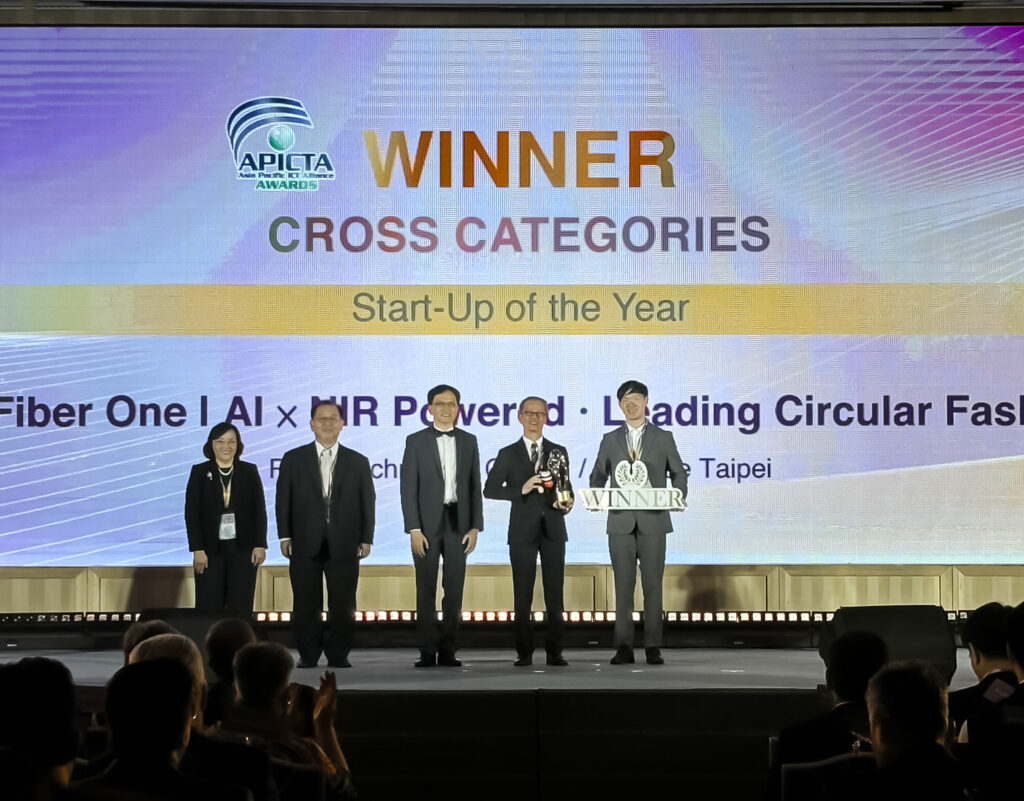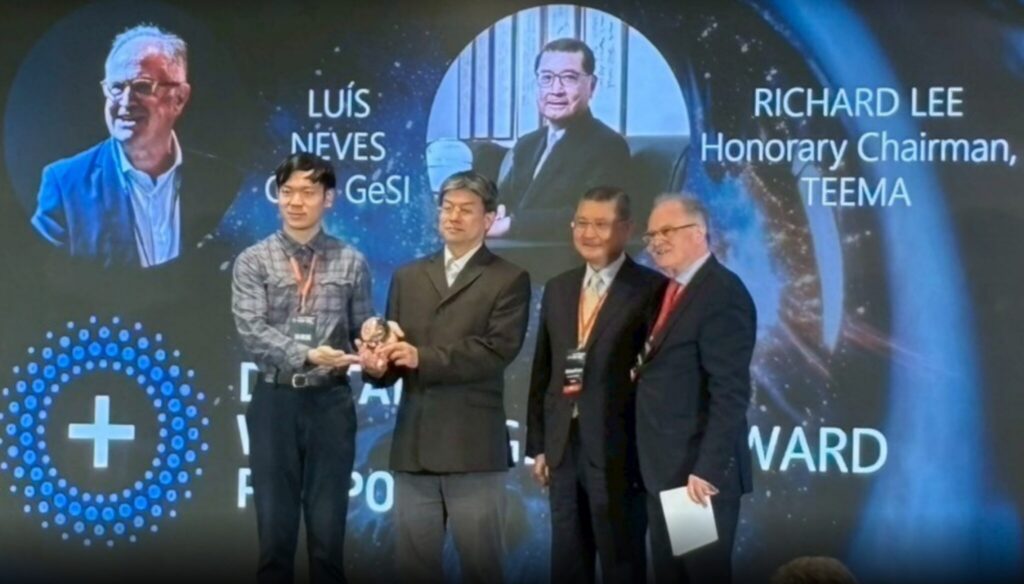
PADE is proud to announce that we have been honored with both the Climate Award and the Global Award at the 2025 Digital with Purpose Global Awards (DWP Global Awards)—the highest distinction presented at this year’s event. These recognitions highlight PADE’s leadership in using advanced digital technologies to transform textile recycling and advance global sustainable fashion solutions.
The awards were presented during the 2025 AI with Purpose Global Summit in Taipei, a landmark gathering that brought together experts, policymakers, and innovators from over 10 countries to explore how AI-driven solutions can accelerate meaningful progress toward the United Nations Sustainable Development Goals (SDGs).
PADE stood out among 24 international teams competing across five key sustainability categories—Climate, Biodiversity, Education, Health & Wellbeing, and Smart Cities—earning both the Climate category accolade and the overall Global Award for our purpose-built approach to textile circularity.
At the heart of PADE’s innovation is a proprietary AI-enabled system that integrates near-infrared (NIR) optical sensing with machine learning algorithms, enabling highly accurate identification and classification of post‑consumer textile materials, including complex blended fibers. This capability is critical in unlocking true circular pathways for textile waste, moving far beyond traditional low‑value recycling.
The recognition also reinforces PADE’s commitment to real‑world impact: promoting efficient recycling, reducing waste, and forging partnerships across the supply chain—from consumers and brands to recyclers and manufacturers. As part of this vision, PADE announced plans to establish the world’s first Textile‑to‑Textile Demonstration Center in Taiwan by the end of 2025, designed to showcase integrated recovery, sorting, and remanufacturing operations at scale.
This milestone signifies a major step forward in PADE’s mission to make high‑value, traceable textile circularity a global standard—and to empower the fashion and textile industries to lead, rather than contribute to, environmental impact.