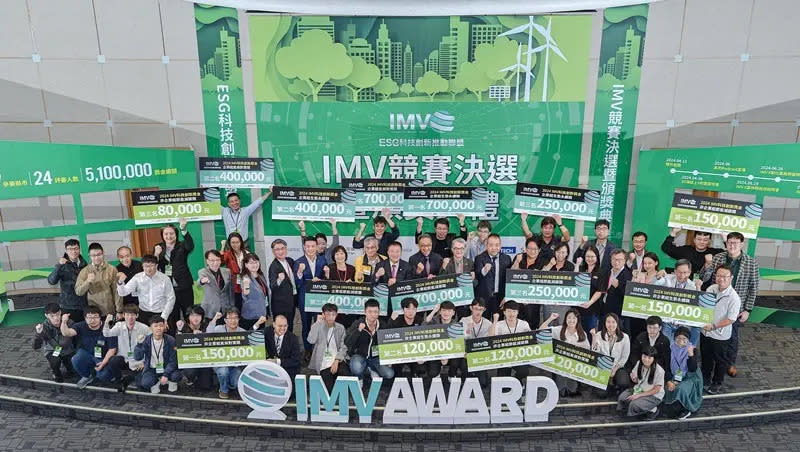
的展前記者會上肯定與獎勵臺師大衍生新創沛德永續科技公司劉曜達執行長-由右數起第四位、光電所謝振-1024x768.jpg)
Harnessing Technology to Transform Textile Waste into a Circular Resource
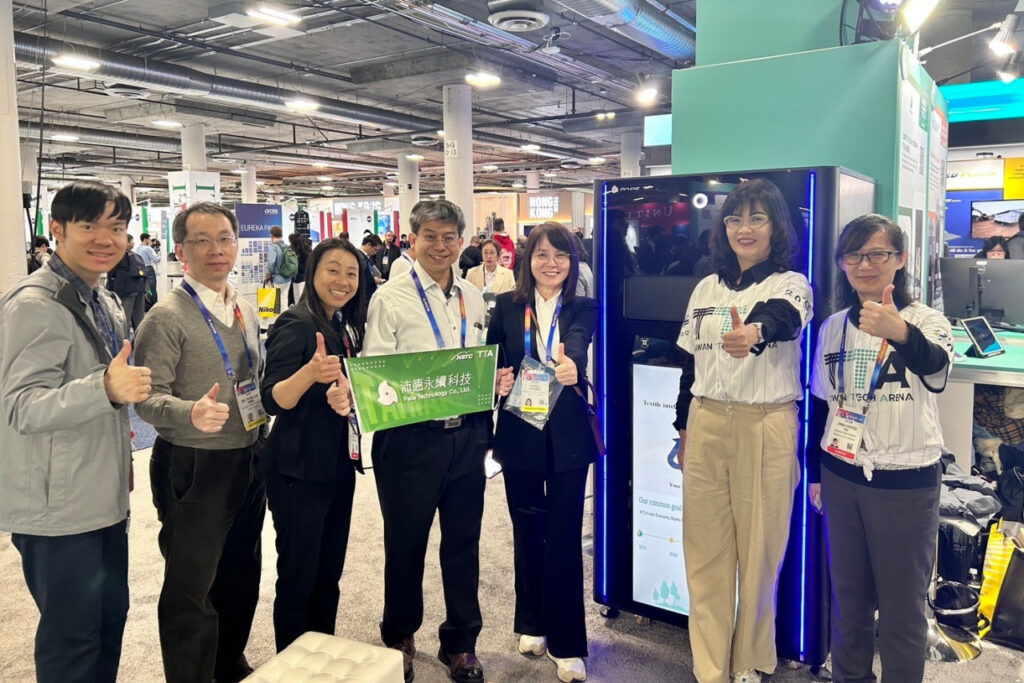
PADE Sustainability is proud to share a major milestone in our journey to advance textile circularity through technological innovation. Our team was selected to represent Taiwan as part of the national startup delegation at CES 2025 in Las Vegas, one of the world’s most influential technology expos. This recognition highlights our ongoing commitment to creating practical, scalable solutions that address pressing sustainability challenges in the textile industry.
From Innovation to International Stage: Selection and Participation at CES
CES, held annually in the United States, brings together influential companies, innovators, and thought leaders from over 150 countries to showcase cutting-edge technologies and emerging trends across global industries. At CES 2025, PADE Sustainability was honored to be selected among 72 leading Taiwanese startups invited to present at the Taiwan national pavilion. During the event, we unveiled our AIoT-enabled Textile Identification and Sorting System—the world’s first portable solution capable of rapidly recognizing and categorizing textile materials for recycling and reuse.
Being chosen to join the national tech delegation and present on an international stage was both an honor and a validation of the work our team has dedicated years to developing. The event provided an unparalleled opportunity to demonstrate our innovation to a global audience, forming valuable connections with international participants, industry experts, and potential partners.
AIoT-Driven Textile Sorting for Circular Economy
Central to PADE’s mission is the development of technology that can overcome long-standing obstacles in textile recycling. Traditional methods of sorting discarded garments and fabrics often rely on manual labor and rudimentary techniques, which are time-consuming and error-prone due to the complex mix of natural and synthetic fibers.
Our proprietary AIoT (Artificial Intelligence of Things) Textile Identification and Sorting System integrates advanced optical sensing with intelligent data analytics to rapidly and accurately identify material compositions without damaging the fabric. The system can process textiles efficiently, making it possible to categorize materials at scale and feed them into appropriate recycling streams. This breakthrough enhances the quality and purity of recycled inputs, supporting higher-value reuse and enabling a true circular loop—from old garments back to new textile products.
By automating what has traditionally been a labor-intensive bottleneck, our technology increases precision, reduces labor costs, and contributes to a more reliable, traceable supply of recycled materials for downstream partners and manufacturers.
Advancing Beyond Demonstration to Real-World Impact
Participating at CES and receiving international attention reaffirmed that impactful sustainability innovation requires not just visionary ideas but tangible technologies that can be adopted across sectors. The strong response from global attendees—many of whom were outside the textile industry—demonstrated widespread recognition of the importance of solutions that can make textile recycling more efficient, scalable, and economically viable.
For PADE, this experience has reinforced our belief that true transformation in sustainability is driven by solutions that are technically robust, commercially feasible, and socially relevant. It is our responsibility to ensure that innovation does more than inspire—it must deliver measurable results that uplift entire ecosystems.
Scaling Impact and Building the Circular Textile Ecosystem
Looking ahead, PADE remains committed to scaling our technology and expanding its real-world adoption. We will continue refining our AIoT system to improve sorting accuracy, throughput, and integration with partners across the recycling value chain. Our goal is to help brands, recyclers, and manufacturers improve resource efficiency, strengthen material traceability, and accelerate industry-wide adoption of circular practices.
We also aim to deepen collaboration with academic institutions, industry leaders, and governmental organizations to cultivate a robust ecosystem for textile circularity. Through shared innovation and cooperative action, we can help move the global textile industry closer to its sustainability goals, reduce waste, and contribute to a more resilient, regenerative economy.
The recognition at CES 2025 is both an honor and a stepping stone—one that energizes us to continue pushing for meaningful impact in the world of sustainable textiles.
News Source
Business Today ESG Taiwan, “Smart Textile at CES! Old Clothing Materials Identified with a Scan — First-of-Its-Kind Optical Sorting Equipment Selected for Taiwan Startup National Team” (January 17, 2025).